

Every spin of a virtual slot, every card dealt in a virtual blackjack room, all roulette balls that travels across an digital wheel depends on one hidden piece of technology. That piece is the Random Number Generator, or RNG. For Australian players who enjoy the adventure of sites like Casino Kingdom, understanding how these algorithms work converts a basic wager into a fascinating encounter with intricate math and strict security measures.
What Separates True Randomness and Pseudo-Randomness
True randomness exists only in the physical world, observed in phenomena like radioactive decay or atmospheric noise. Digital systems, by their deterministic nature, cannot achieve this pure state. Instead, they rely on pseudo-randomness, a simulated version that satisfies every statistical test for randomness while being technically reproducible if the exact initial conditions are known.
For a player located in Sydney or Perth, the distinction between true and pseudo-randomness is academic. The algorithms used by regulated platforms produce sequences indistinguishable from natural entropy. The critical factor is the entropy source, or seed, which introduces unpredictable real-world variables into the equation to prevent any pattern from emerging over billions of game rounds.
Casino Kingdom uses hybrid approaches that combine algorithmic generation with hardware-based entropy collection. Mouse movements, keyboard timings, and server-side atmospheric noise can all enter the seed pool. This fusion creates a digital environment where the mathematical predictability of a computer is overridden by the chaotic beauty of the physical universe.
The next phase of Random Number Generation in Online Gaming
Quantum computing looms on the horizon as a challenge and a chance for RNG technology. Quantum random number generators leverage the inherent unpredictability of quantum mechanics, generating true randomness that outpaces any traditional algorithm. Early prototypes have already been incorporated within high-security systems, and the gaming industry is watching closely.
For platforms like Casino Kingdom, the adoption of quantum entropy sources would constitute the ultimate seal of fairness. A photon passing through a beam splitter produces a genuinely random outcome that even the laws of physics cannot predetermine. Incorporating such hardware into online gaming infrastructure would remove any lingering doubts about algorithmic bias and establish a new global standard.
Blockchain technology also offers intriguing possibilities for verifiable randomness. Smart contracts can integrate decentralised random beacons that broadcast cryptographic proofs of fairness. An Australian player could independently verify that their game result was not tampered with, without depending on the casino’s internal auditors. This transparency could redefine the relationship between operators and players.

Artificial intelligence is being employed to monitor RNG outputs as they happen, identifying subtle anomalies that human auditors might miss. Machine learning models can sift through terabytes of game data to find patterns suggesting a compromised seed or a failing hardware entropy source. This proactive approach guarantees that fairness is not merely a certification badge but an active, ongoing quality of the platform.
The evolution of mobile gaming in Australia demands RNGs that are lightweight yet secure. Casino Kingdom adjusts its algorithms to run efficiently on smartphones without compromising cryptographic strength. The same rigorous randomness that powers a desktop pokie needs to transfer smoothly to a handheld device, keeping fairness intact across every possible screen size and operating system.
The Fundamental Principles of RNG Technology
At its most fundamental level, visit the website, a Random Number Generator is a mathematical process designed to produce a sequence of numbers that lacks any predictable pattern. In online casinos, these numbers map directly to game outcomes. A single millisecond difference in timing can alter the entire result, ensuring no external force can manipulate the final display on the screen.
The hardware and software behind these systems work at lightning-fast speeds. Modern RNGs can generate hundreds of thousands of values every second, cycling through complex equations even when a game sits idle. This constant churn guarantees that the moment a player presses the spin button, the outcome is drawn from an enormously large pool of potential numerical sequences.
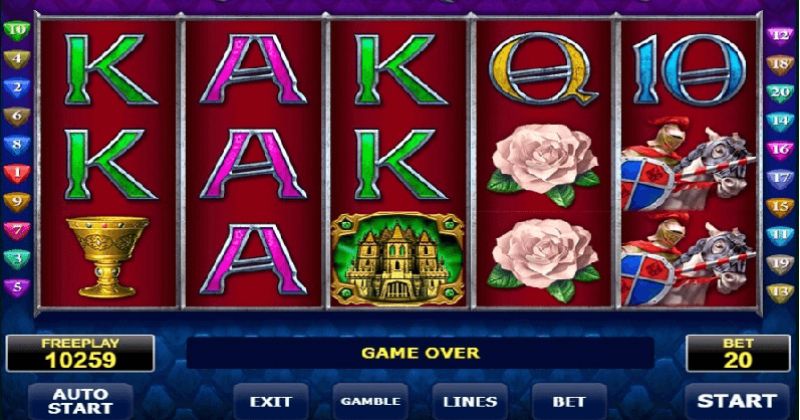
Casino Kingdom relies on sophisticated pseudo-random number generators that use mathematical formulas to simulate true randomness. These formulas take an initial input, apply a series of modular arithmetic operations, and output a result that appears statistically chaotic. The sheer volume of calculations performed per second makes reverse engineering the algorithm practically impossible for any external observer.
The function of seed numbers and computational methods
A seed number is the starting point for the entire pseudo-random sequence. View it as the first domino in an infinitely long chain. If two identical algorithms receive the same seed, they will yield the exact same sequence of outcomes. The art of secure RNG design lies in making that seed as unpredictable as possible and updating it frequently enough to avoid any long-term pattern analysis.
Casino Kingdom employs a continuously renewing seed architecture. The first seed might be obtained from a mix of server clock cycles, thermal noise, and even quantum-level fluctuations gathered by custom hardware. This seed is then input into a cryptographically secure algorithm, such as the Mersenne Twister or a SHA-256 based generator, which stretches that small amount of entropy into a enormous stream of numbers.
For pokies enthusiasts across Australia, this implies that the game they enjoyed last week and the one they enjoy tonight possess no mathematical relationship. The seed is destroyed and renewed continuously, often between individual bets. The algorithm itself transforms into a black box that transforms chaotic real-world input into equitable, unbiased digital entertainment.
Gathering Entropy in Modern Casino Systems
Entropy is the indicator of unpredictability, and collecting high-quality entropy is the ultimate goal of RNG design. Modern systems implemented by platforms like Casino Kingdom utilise multiple entropy sources simultaneously. Network packet arrival times, disk seek latencies, and even subtle variations in CPU voltage can be gathered and refined into a clean random seed that withstands any attempt at prediction.
The distillation process uses a cryptographic hash function to combine these diverse inputs into a uniform output. Even if an attacker could control one entropy source, the influence of the others would overwhelm any bias. This defence-in-depth strategy guarantees that the final seed remains robust against both theoretical and practical attacks, safeguarding every bet placed on the platform.
Common Misconceptions Regarding Electronic Fairness
Among the very persistent myths is that online casinos have the ability to manipulate RNG outcomes according to player behaviour, like tightening payouts after a big win. This misconception originates from a misunderstanding of how certified RNGs operate. A properly audited generator maintains no memory of past results and no capacity to target individual accounts with altered probabilities.
An additional fallacy relates to the notion of hot and cold streaks being manufactured by the software. In reality, streaks represent a natural product of statistical variance. A fair RNG will generate clusters of wins and losses that resemble the gambler’s fallacy perfectly. Casino Kingdom’s games present these streaks precisely as a physical machine would do, driven purely by the cold mathematics of probability.
Some players believe that the rate of their clicks or the scheduling of their bets can affect the outcome. While the specific millisecond of a button press dictates which number is pulled from the constant stream, this is not a skill that can be refined. The stream moves at great speed and is too erratic for any human to synchronise with, rendering the timing effect a source of pure chance rather than a tactical advantage.
Refuting the Manipulation Myth with Mathematics
The mathematical proof of RNG fairness rests in the law of large numbers. Over millions of spins, the actual payout percentage converges to the theoretical return to player, or RTP. Independent auditors verify this convergence by running simulations that would take a human centuries to play. Any deviation would promptly signal the software as compromised, resulting in a revocation of the gaming licence.
Casino Kingdom releases the RTP values of its games, and these figures are confirmed by the same third-party tests. A player who monitors their own results over a short session may observe wild fluctuations, but the underlying engine holds steady. The casino’s mathematical edge is built into the game rules, not into the randomness generator, which remains a neutral arbiter of fate.
Regulatory Supervision in the Australian Market
Australia has a distinctive regulatory framework for online gambling, with the Interactive Gambling Act 2001 setting strict boundaries. While the Act largely targets operators, it creates an environment where platforms accommodating Australian players must adhere to international standards of fairness. Casino Kingdom meets these expectations by voluntarily subjecting its RNG systems to certification bodies acknowledged globally.
Testing agencies such as eCOGRA and iTech Labs carry out exhaustive evaluations that go far beyond simple statistical checks. They decompile the software, examine the source code, and perform simulations that span billions of game rounds. A certificate of RNG integrity from these bodies is not a one-time achievement but a recurring obligation that necessitates continuous compliance and unannounced inspections.
For the Australian punter, this regulatory framework delivers a safety net. When they log into Casino Kingdom, they are engaging with a system that has been mathematically proven to be fair. The house edge is a transparent, published figure, and the randomness of each outcome ensures that every player encounters the same statistical reality, whether playing from Melbourne or Darwin.
The method Casino Kingdom Implements RNG Integrity
Trust is the foundation of any online gaming platform, and Casino Kingdom invests heavily in preserving an unassailable RNG infrastructure. The platform’s random number generators receive regular audits by independent testing laboratories that are experts in gaming mathematics. These third-party evaluators examine millions of game rounds to confirm that statistical variance aligns with expected theoretical models.
Australian players accessing Casino Kingdom enjoy a system where every game outcome is hashed and logged. This cryptographic approach establishes an immutable record that can be checked retroactively. If any discrepancy were to occur, the entire sequence of generated numbers could be examined without affecting the proprietary nature of the core algorithm itself.
The implementation goes beyond the software layer into physical server security. Dedicated hardware security modules hold the critical seed generation components, isolated from external network interference. This air-gapped approach guarantees that even if the main gaming servers were attacked, the fundamental randomness engine would remain untouched and uncorrupted.
The reason RNG Transparency Matters to the Aussie Player
Trust in digital systems is fragile, and in no place is that more reddit.com evident than in online gambling. When an Aussie player deposits real money, they need assurance that the game is not a sophisticated illusion. RNG transparency closes the distance between advanced computer science and the simple desire for a genuine punt. It transforms a closed system into a glass box, even if the underlying workings remain arithmetically dense.
Casino Kingdom recognizes that transparency is a strategic advantage. By openly discussing its RNG certification and soliciting scrutiny from autonomous watchdogs, the platform develops a group of educated players. Knowledge clears the doubts where suspicion breeds, and an educated punter is significantly more prone to savor the fun value of the games without the persistent fear of being cheated.
The collective aspect of gambling in Australia, from the nearby pub TAB to the virtual realm, hinges on a common belief in the honesty of the game. RNG technology is the virtual equivalent of a mixed deck or a turning roulette wheel. When that technology is demonstrated fair, the bonding of a joint win or the consolation of a close call becomes authentic human experience rather than a scripted simulation.
Practical Steps to Confirm an RNG Independently
While the average player cannot readily decompile the software, there are tangible indicators of RNG trustworthiness. The existence of a valid certification seal from an accredited testing agency is the most direct sign. Clicking that seal on Casino Kingdom’s website should lead to a live certificate that specifies the scope of the audit and the games covered under its umbrella of protection.
Another method is to track the distribution of results over an lengthy period. While this requires patience, a fair RNG will yield a bell curve of outcomes that aligns with the game’s published variance. Extreme deviations are possible in the short term, but a consistent bias over thousands of spins would be practically impossible under a adequately functioning generator.
Players can also look into the software providers powering the games. Industry leaders like Microgaming and NetEnt have decades of reputation at stake and submit their RNGs to the most rigorous testing on the planet. When Casino Kingdom hosts titles from these developers, it gains their legacy of numerical integrity, adding an extra layer of certainty for the discerning Australian gambler.